MOI · Theme 1 of 4
Identity
We are not a mind that looks at the world. We are the world that, by means of a body and a brain, produces effects.
We are not a mind that looks at the world. We are the world that, by means of a body and a brain, produces effects.
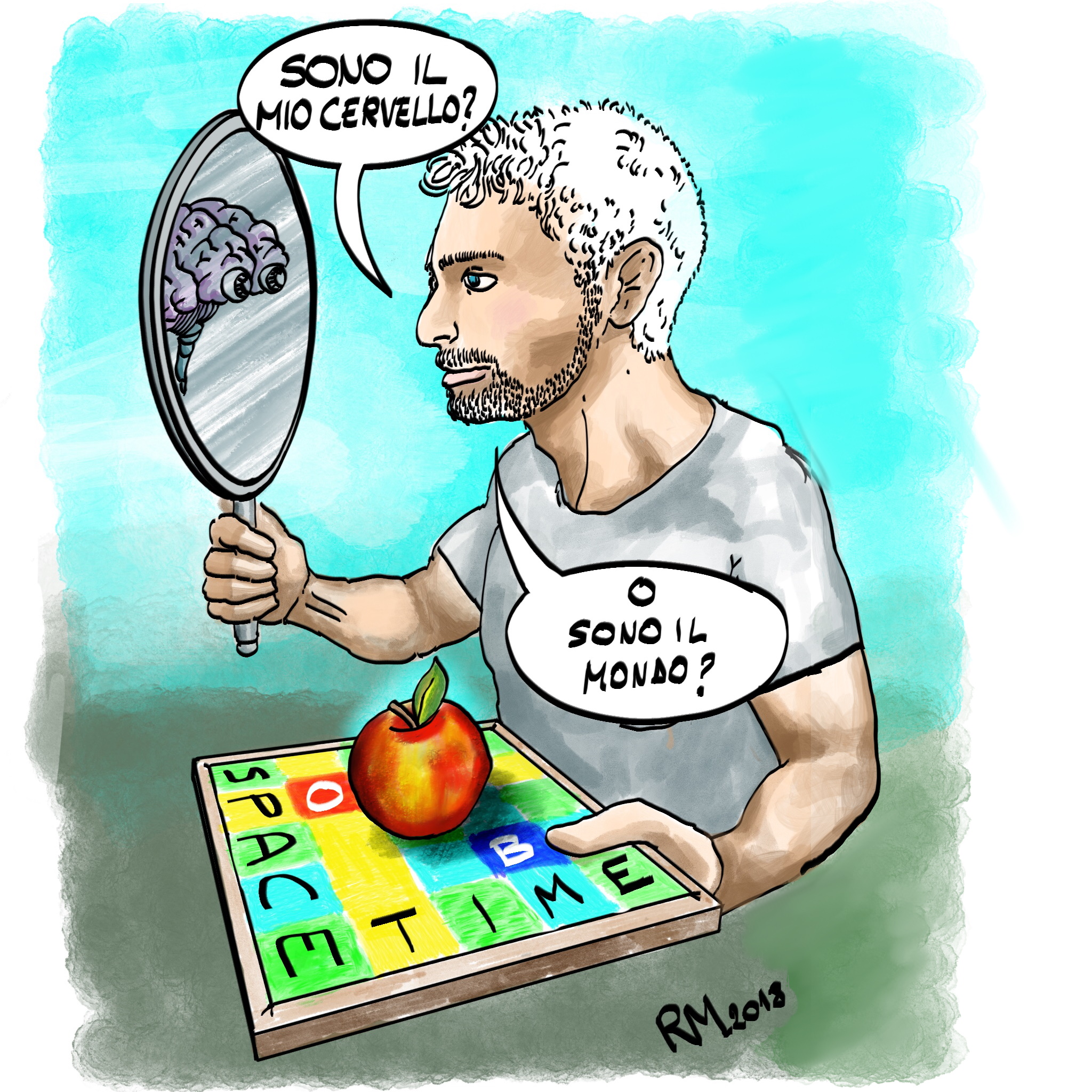
The answer modern culture has built over three centuries of philosophy of mind runs roughly like this: you are a subject, a point of view, a center of experience that sits in here and looks out there. You are, in the last analysis, a brain that produces images of the world. Those images may be astonishingly faithful to the original, but they remain representations — that is, copies.
This answer has enormous appeal, because it combines the Cartesian intuition of the cogito with the neural empiricism of contemporary science. But it also carries an insoluble problem: if consciousness is a copy of the world, who looks at the copy? And who looks at the one who looks?
The Mind-Object Identity proposes something radically different: you are not a mind set over against the world. You are the world — or rather, you are that part of the world which exists relative to your body and your brain.
"We are used to thinking that the mind is inside the skull. But no one has ever proved it. It is an assumption so old that it looks like a fact."
Riccardo Manzotti · The Spread Mind
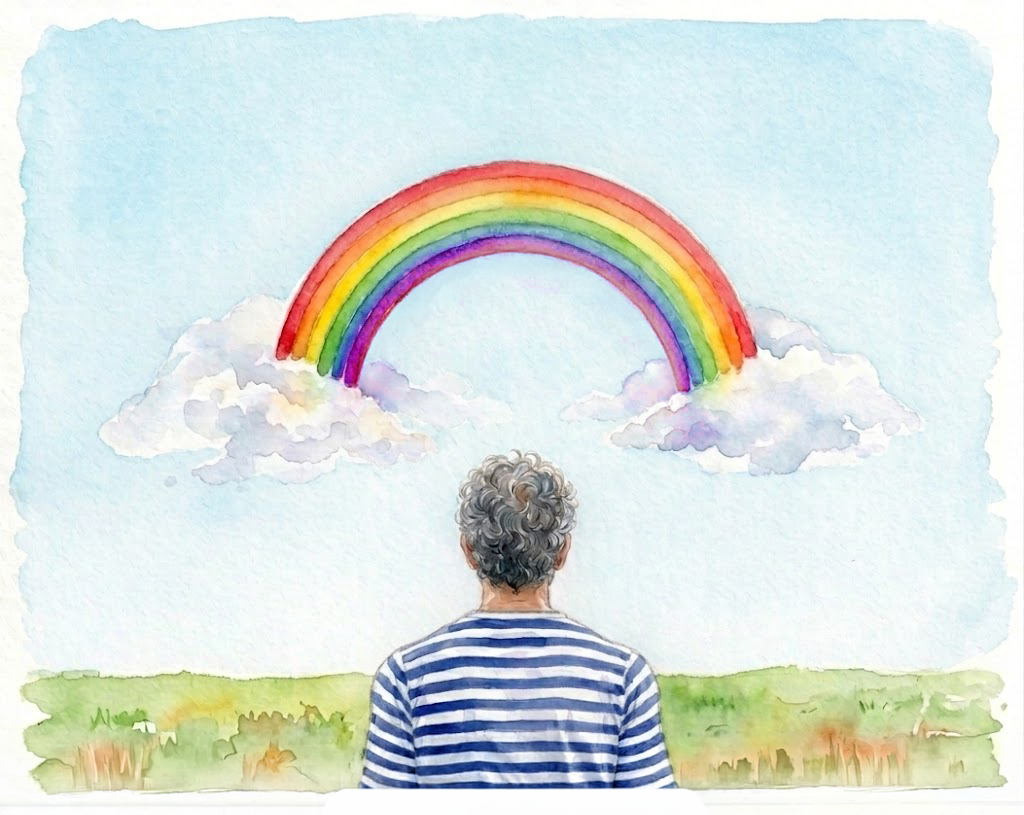
Consider the rainbow. Where is it? Physically, it is a swarm of water droplets, each of which bends and reflects the sunlight at a precise angle toward the observer. But "the rainbow" — that colored arc suspended in the sky — exists only in relation to the eye that looks. Move a hundred meters and you will see a different rainbow. Not because you are imagining it, but because the rainbow that exists for you is physically different from the one that exists for the person beside you.
The rainbow is not inside you. It is not a hallucination. It is not a representation. It is a real physical process that takes place in the world and exists relative to a body. This is the structure of mind-object identity: the subject is not the body, not the brain — it is the causal process that the body helps bring about.
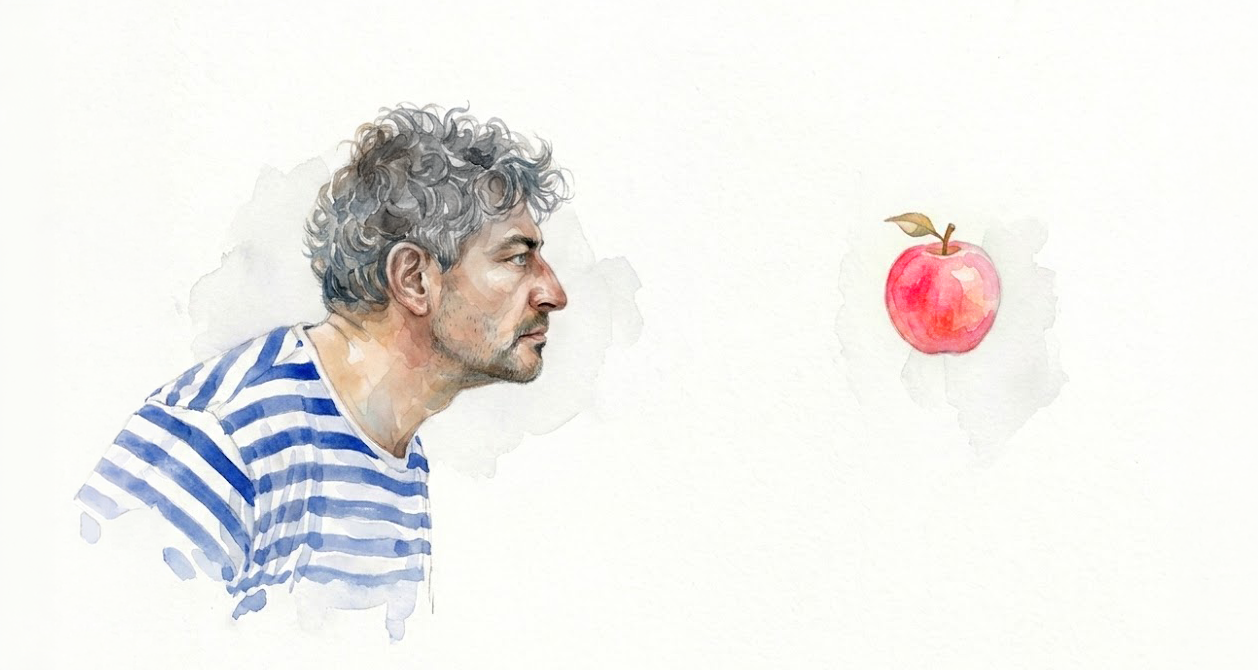
To look at the red apple is not to produce an inner image of the apple. It is to be, here and now, that red apple which exists relative to you. There is no inside and outside. There is only the world, articulated by its causal relation to the body.
You = Worldbody
You are not separate from the world you perceive. You are that portion of the world which exists relative to your body. Consciousness is not produced by the brain: it is the object, insofar as that object exists for you.
To think of oneself as a point of view is still to think that there is something that "looks" from a place separate from the scene. The MOI overturns this metaphor: there is no observer outside the scene. The scene — the set of things that exist relative to your body at this moment — is what you are.
The brain is not the screen on which the film of the world is projected. It is rather a causal structure that helps determine which portions of the world are brought into existence as this specific object, at this specific moment, for this specific body.
You are, in a precise and non-metaphorical sense, the world that exists relative to you. This is not panpsychism, not idealism, not mysticism. It is physics: an object is always relative to something, and that relation is not mental but causal.